trademark

What is a Trademark?

TM Photo

Basic IP Terminology Series—What is a Trademark?

Earlier this month, I posted the first blog entry in my basic IP terminology series about copyright.  This time, we’ll take a look at what exactly a trademark is and what the benefits are of protecting and registering your trademark.

What is a Trademark?

Trademark and copyright are often confused by those who are unfamiliar with how IP rights are distinguished.

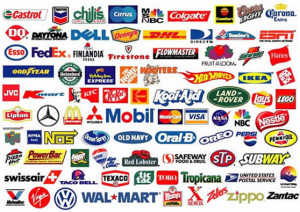
A trademark is a word or design (like a logo) that is used in a branding capacity to indicate to consumers the source of the particular product or service that is being offered to the public.
The TM and ® Symbol – What’s the Difference?

240px Trademark Warning Symbol.svg  - The TM and  ® Symbol - What's the Difference?

Everyone is familiar with trademarks—those logos, slogans, and brand names we come across every day— but not everyone knows the difference between the TM symbol and the ® symbol.

If you haven’t noticed it before, a very small “TM” in bold, UPPERCASE or a small r-in-a-circle symbol (“®”) appears in superscript, most often in the upper right hand corner of a trademark.

If you claim rights to use a trademark, applying the correct symbol designation serves to notify your competitors of the type of trademark rights you have in your mark. In the event that you sue someone who is using your trademark without your permission, failure to provide proper notice of your trademark in this way may result in your inability to obtain money damages or recover your court costs.

Public Association Trademarks: The Case of the New York Yankees and the Evil Empire

New York Post - Yankee cover

Every once in a while, a court issues a decision reminding us that we may have rights we’ve never known about or sought to assert. This time the Trademark Trial and Appeal Board (TTAB) has given the New York Yankees more than they initially sought to claim for themselves.

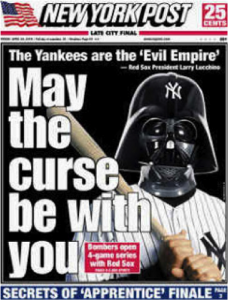
Last month, a panel of TTAB judges held that the New York Yankees could prevent Evil Enterprises, Inc. from using the phrase BASEBALLS EVIL EMPIRE on clothing because the public had, in fact, come to regard the New York Yankees as, the “evil empire” of Major League Baseball.

Trademark Applications Web Specimens: the USPTO Releases New Guidelines

Web specimen blog 300x212 - Trademark Applications Web Specimens: the USPTO Releases New Guidelines

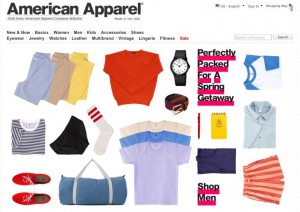
Because so many companies market their goods and services online, owners and management naturally expect that their branded websites will be good specimens to support their applications for trademark registration and extensions.

Websites are usually excellent and appropriate demonstrations of the use of a trademark. But, companies are well-advised to use extra care when submitting a website sample as a supporting specimen for trademark registration; the USPTO’s examination of them is especially exacting. If it finds the specimen insufficient, the consequence may be long delays in the application process and possible rejection of the mark.

Color Trademarks and Fashion: Branding That “Pops”

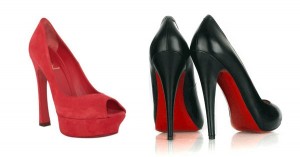
YSL Christian Louboutin red soles 300x157 - Color Trademarks and Fashion: Branding That “Pops"

Color trademarks are those which use a color alone as the brand for a product, what trademark experts call a “source indicator.” Color marks are considered non-traditional trademarks, and they are generally disfavored by the U.S. Patent and Trademark Office. Nonetheless, some color marks have achieved “distinctiveness,” that is, the degree of public recognition as a source indicator compels the USPTO to allow owners to register the color as a mark in their field of commerce.

Expanding the Internet: What do ICANN’s New gTLD Applications Mean for Trademark Owners?

One year ago, as part of a plan to expand the capacity of the Internet’s domain name system, the Internet Corporation for Assigned Names and Numbers (ICANN) began accepting applications for more generic top-level domain names (gTLDs). Currently, the well-known gTLDs include .com, .org, and .net, as well as some of the country indicators that have been repurposed, such as .tv and .es. Adding gTLDs will allow for exponentially more domain names. During the new gTLD application period, ICANN opened the door to any combination of three or more letters in most major alphabets: .blue, .school, .mcdonalds, .law or .商城. The possibilities might seem almost endless, but, on “Reveal Day,” ICANN disclosed a list of 1,930 applications for new gTLDs

Louboutin Loses: The Red-Soled Plot Continues

Footwear designer Christian Louboutin, has just suffered another set-back in the company’s ongoing effort to own the red sole, this time in Louboutin’s native France. In 2008, Louboutin filed a lawsuit in Paris against Spanish clothing manufacturer and retailer Zara, after Zara sold a red-soled shoe.  This May, the French Cour de Cassation (the French appeals court) irrevocably invalidated Louboutin’s trademark to the red sole in France. The decision appeared to rest on what some might consider a technicality, with the Cour de Cassation noting that Louboutin’s France trademark registration lacked a specific Pantone color reference, a standardized color reproduction code used universally in a variety of industries and in trademark registration[1]. Accordingly, the Cour de Cassation faulted the registration for its lack of precision and distinctiveness. Without the degree of precision that French law considers essential to a trademark, Louboutin was criticized for simply trying to maintain the registration of a “concept,” that of putting bright red soles on shoes produced by the same brand. A “concept,” said the Court, is not sufficient to justify trademark registration. Louboutin was also ordered to pay €2,500 (approximately $3,600) of Zara’s litigation costs for the failed legal action.
 

Linsanity: From the Basketball Courts to the Trademark Office

“Linsanity” began in February when Knicks benchwarmer Jeremy Lin unexpectedly took the basketball world by storm. Lin had received no athletic scholarship offers out of high school, wasn’t drafted out of college, and was assigned to the Warrior’s D-league three times in his first season with the NBA. A soaring basketball career was not generally expected from this 2010 Harvard University graduate, but, after suddenly leading the Knicks to five victories in a row, Lin was promoted to the Knicks’ starting lineup. Lin even impressed veteran Lakers player, Metta World Peace (born Ron Artest), who ran by reporters shouting “Linsanity! Linsanity!” after, with less than a second remaining, Lin scored a game-winning three-pointer against the Toronto Raptors. So, on the Monday after the last game of his five-game winning streak, Lin did what any good manager would advise a rising star with a catchy moniker to do: he had his lawyers file a trademark application to register LINSANITY with the United States Patent and Trademark Office (USPTO).

“Here’s Looking at You, Kid”: That’s Not London Fog in the Moroccan Mist

Burberry has made extensive social media efforts this year to tell the public how its iconic look and status developed over time. Companies, like Burberry, with a visual history to promote, are especially attracted to Facebook’s Timeline.

Timeline lets users post stories and pictures in chronological order. Visitors scroll down on a Facebook page and go back in time to the initial creation of a product.

The company can create a nostalgic connection between the visitor and the brand. The Facebook Timeline for this “156 year-old global brand with a distinctly British attitude” includes photos of Burberry’s first store opening in 1856, images of pilots wearing Burberry aviator suits, and pictures of its classic trench coat through the years.

Obama’s Campaign Committee Sues Online Vendor for Trademark Infringement

Last week President Obama’s campaign committee, Obama for America, filed a trademark infringement lawsuit against an online vendor, DemStore.com, for allegedly using the campaign’s trademarked logo without permission. The campaign sent DemStore.com two “cease and desist” letters last year, but the company did not stop using the logos. DemStore has sold merchandise supporting Democratic candidates since 1985, and currently sells Obama election merchandise bearing two logos that belong to Obama for America. The two logos at issue are the “Rising Sun” logo, which Obama for America has owned under a federally registered trademark since 2008; and the “2102 Rising Sun” logo, for which it has a pending federal trademark application.